
“The Paradox of Hate—Complexity Lost and Found” is presented in terms a conceptual framework Dr. Ringstrom calls the “Three P’s” which refer to ideas about prediction, paradox, and play. He will illustrate this framework in his work with “Wendy”, a patient who returned to therapy after 25 years during the first year of COVID. His work focuses on her “phobic” aversion to confrontation, which was situated in a developmental background of rearing by White Christian Supremacist parents, whose intrusions in every part of her life were compounded by a continuous barrage of racial slurs. Surviving this involved her dissociated “inner migration”, a “sequentialization” which he refers to as “Barbie’s World” in childhood and “Wendy’s World” when replicated in adulthood. They penetrated both through treatment moving from prediction into paradox and finally play.
The Paradox of Hate: Complexity Lost and Found
Agenda
- 7:30 pm Welcome & introduction
- 7:35 pm Presentation by Dr. Ringstrom
- 8:30 pm Q&A
Learning Objectives
- Utilize the conceptual framework Dr. Ringstrom calls the "3 Ps" referring to prediction, paradox and play in psychoanalytic psychotherapy
- Compare the use of the conceptual framework involving the “3 Ps” to more traditional psychoanalytic frameworks.
- Apply this framework to understanding dissociation and trauma in clinical work.
Meet the Presenter
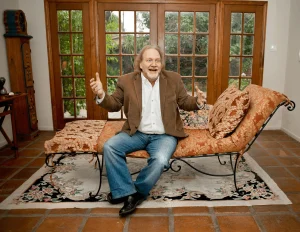
Philip Ringstrom, PhD, PsyD
Philip Ringstrom, PhD, PsyD is a Senior Training and Supervising Analyst and Faculty Member at the Institute of Contemporary Psychoanalysis, in Los Angeles, California. He is a founding member of the Board of Directors of IARPP, the International Association for Relational Psychoanalysis and Psychotherapy, and a member of the International Council of Self-Psychologists. He is on the editorial boards of Psychoanalytic Dialogues, Psychoanalytic Perspectives, and Psychoanalysis: Self and Context. He has published over 60 articles, chapters, and reviews and has presented at conferences all over the world. His book A Relational Psychoanalytic Approach to Couples Psychotherapy (Routledge 2014) won the Goethe Award for Psychoanalytic and Psychodynamic Scholarship in Psychoanalysis for 2014. He is currently writing a new book titled Psychoanalytic Play: Dramatization, Narration, and Improvisation in Field Theory and Metapsychology.
References
Anderson, T. (2026). The fragmented self, recognition, and the edge of desire: Foundations of the psychoanalysis of unstable objects (1st ed.). Routledge.
Anderson, T. (2026). Gravitational psyche: Further developments of the psychoanalysis of unstable objects (1st ed.). Routledge.
Pollan, M. (2018) How to Change Your Mind: What the New Science of Psychedelics Teaches Us About Consciousness, Dying, Addiction, Depression, and Transcendence. Penguin Press.
Ringstrom, P. A. (2007). Scenes that write themselves: Improvisational moments in relational psychoanalysis. Psychoanalytic Dialogues, 17(1), 69–100.
Ringstrom, P.A. (2022) Psychedelics and psychoanalysis: A conversation long overdue. Psychoanalytic Dialogues. 32(5), 444-451.
Ringstrom, P.A. (2023). Drama and narration: The architecture of psychoanalytic play. Psychoanalytic Inquiry, 43(7), 539–550.
Ringstrom, P. A. (in press). Journey of a psychoanalytic psychonaut: Epiphanous moments in the integration of ideas from both psychedelics and psychoanalysis. Psychoanalytic Inquiry.
Ringstrom, P. A. (in press). Psychoanalytic play: Metapsychology, field theory, and theories of therapeutic action: An autobiographical approach. Psychoanalytic Inquiry.
Disclosures
Division 39 is approved by the American Psychological Association (APA) to sponsor continuing education for psychologists. Division 39 maintains responsibility for this program and its content.
CE Eligibility
This program, when attended in its entirety, is eligible for 1.5 continuing education credits. Austin Psychoanalytic will provide certificates of attendance to participants who attend the program in full. Austin Psychoanalytic’s continuing education programs are sponsored through Division 39’s APA-approved continuing education program. It is the responsibility of each licensee to verify that a given program meets the continuing education requirements for their specific license. Participants outside of Texas should consult their own licensing boards regarding CE eligibility.
Accessibility, Non-discrimination, and Privacy
Division 39 is committed to accessibility and non-discrimination in all continuing education activities and conducts its programs in accordance with the American Psychological Association’s Ethical Principles of Psychologists and Code of Conduct. Reasonable accommodations will be made whenever possible for participants with accessibility needs. Questions, concerns, requests for accommodations, or complaints may be directed to info@austinpsychoanalytic.org. Participants are also asked to respect the privacy and confidentiality of others throughout the program.
Financial Disclosure
There is no commercial support for this program. Neither Division 39, Austin Psychoanalytic, nor the presenter has any financial relationships or conflicts of interest that could reasonably be construed as influencing the program content.
Cancellations and Refunds
Registrants may cancel or transfer their registration to another person up to 48 hours before the event from their confirmation email, by logging into their member account if applicable, or by contacting info@austinpsychoanalytic.org. No cancellations, transfers, or refunds will be permitted within 48 hours of the event start time.
Grievances
Austin Psychoanalytic conducts its educational programs in accordance with the ethical standards of the American Psychological Association. Participants with a concern regarding a speaker or a Continuing Education program are asked to submit a written account of the matter to info@austinpsychoanalytic.org. Where a complaint is substantiated, Austin Psychoanalytic will determine an appropriate remedy, which may include placement in a comparable program at no additional cost, a credit toward a future program, or a partial or full refund.