
This overview of self psychology will answer the titular questions, offering an introduction to the theory and clinical practice. We will begin with a brief synopsis of the historical origins of the theory, initially developed by Heinz Kohut at the Chicago Institute for Psychoanalysis (now known as the Chicago Psychoanalytic Institute). The talk will then move to specify some of the distinctive features of the theory, especially the role of empathy, the self/selfobject concepts, the selfobject transferences, and the conceptualization of defenses and resistance. We will explore these ideas through a consideration of the therapeutic action of interpretation. Unpacking the self psychological account of interpretation will illuminate these central features of psychoanalytic practice and suggest how self psychological treatments operate.
Self Psychology: What is it? How does it work?
Agenda
- 7:30pm Welcome and introduction
- 7:35pm Presentation by Dr. Reid
- 8:40pm Q&A
Learning Objectives
- Define the self psychological account of interpretation.
- Identify how interpretation is conceptualized as a source of therapeutic action in self psychology.
Meet the Presenter
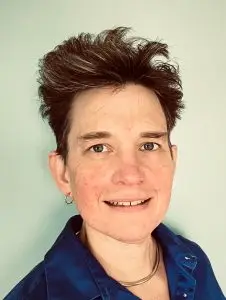
Jane Reid, PhD, MSW-LCSW
Jane Reid, PhD, MSW-LCSW completed her training in psychoanalysis at the Chicago Psychoanalytic Institute, where she is now on the faculty. She teaches in the self psychology sequence there. She is also trained as an analytic philosopher, completing a PhD with a specialization in ethics at the University of North Carolina at Chapel Hill. Her teaching has been recognized at the Institute with the 2025 Candidates’ Association Teacher of the Year Award and at Carolina with the 1994 Chancellor’s Teaching Award for the Excellence in the Teaching of Undergraduates. Additionally, she has taught (remotely) in two programs in China. She has presented at local, national, and international conferences, and her publications include work in the International Association of Psychoanalytic Self Psychology’s journal, Psychoanalysis, Self, and Context. She maintains a private practice Champaign, Illinois, where she offers psychoanalysis, psychoanalytic psychotherapy, and supervision.
References
Geist, R.A. (2016) From self-protection to relational protectiveness: The modification of defensive structures. International Journal of Psychoanalytic Self Psychology 11:368-380
Geist, R.A. (2020). Interpretation as carrier of selfobject functions: Catalyzing inborn potential. Psychoanalysis, Self, and Context 15:338-347.
Reid, J. (2025). How words still matter in self psychology: The power of interpretation to stucturalize the self. Psychoanalysis, Self and Context, 1–14.
Disclosures
Division 39 is approved by the American Psychological Association (APA) to sponsor continuing education for psychologists. Division 39 maintains responsibility for this program and its content.
CE Eligibility
This program, when attended in its entirety, is eligible for 1.5 continuing education credits. Austin Psychoanalytic will provide certificates of attendance to participants who attend the program in full. Austin Psychoanalytic’s continuing education programs are sponsored through Division 39’s APA-approved continuing education program. It is the responsibility of each licensee to verify that a given program meets the continuing education requirements for their specific license. Participants outside of Texas should consult their own licensing boards regarding CE eligibility.
Accessibility, Non-discrimination, and Privacy
Division 39 is committed to accessibility and non-discrimination in all continuing education activities and conducts its programs in accordance with the American Psychological Association’s Ethical Principles of Psychologists and Code of Conduct. Reasonable accommodations will be made whenever possible for participants with accessibility needs. Questions, concerns, requests for accommodations, or complaints may be directed to info@austinpsychoanalytic.org. Participants are also asked to respect the privacy and confidentiality of others throughout the program.
Financial Disclosure
There is no commercial support for this program. Neither Division 39, Austin Psychoanalytic, nor the presenter has any financial relationships or conflicts of interest that could reasonably be construed as influencing the program content.
Cancellations and Refunds
Registrants may cancel or transfer their registration to another person up to hours before the event from their confirmation email, by logging into their member account if applicable, or by contacting info@austinpsychoanalytic.org. No cancellations, transfers, or refunds will be permitted within hours of the event start time.
Grievances
Austin Psychoanalytic conducts its educational programs in accordance with the ethical standards of the American Psychological Association. Participants with a concern regarding a speaker or a Continuing Education program are asked to submit a written account of the matter to info@austinpsychoanalytic.org. Where a complaint is substantiated, Austin Psychoanalytic will determine an appropriate remedy, which may include placement in a comparable program at no additional cost, a credit toward a future program, or a partial or full refund.