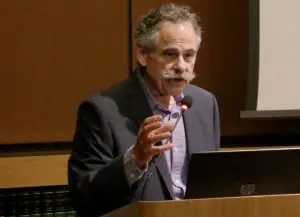
Psyche is the Greek word for soul, mind, or inner life. Polis refers to the city-state or political community—the shared public world. Joined together, psyche and polis evoke the inseparable relationship between the individual’s inner world and the social, cultural, and political worlds they inhabit. The creative individual and the community are necessary to one another, much like the soloist and orchestra in a concerto. Relational psychoanalysis and psychotherapy, in both their clinical and applied forms, place creativity, uncertainty, surprise, mutual influence, and co-construction at the ethical core of the analytic encounter. The relational ethos, however, need not remain confined to the consulting room. It may also be understood as a form of ethical action in the world: an assault on indifference, a defense of human dignity, and a means of fostering collective recognition and responsibility. Historically, the analytic dyad and the larger social world have often occupied an unequal playing field within psychoanalytic discourse. This three-hour seminar will consider what becomes possible when clinical ethics is extended beyond the dyad to encompass citizenship, community, political violence, and human rights. It will ask how psychoanalysts and psychotherapists may remain attentive to the singularity of individual experience while also recognizing the social conditions that shape psychic life.
Early and often underappreciated theorists, including Erich Fromm, Marion Milner, and Otto Rank, will be considered alongside contemporary relational thinkers who have expanded psychoanalytic understandings of creativity, aesthetic experience, clinical process, and ethical action. Clinical and applied material will explore how a person may fashion a singular art of living while resisting the fashions and coercive demands of the times.
The seminar will focus on two complex case studies: a pending United States deportation involving questions of justice, trauma, citizenship, belonging, and human dignity; and the life and work of the eminent Greek composer and activist Mikis Theodorakis, whose creative and political commitments emerged in response to persecution, imprisonment, exile, and historical violence. Through presentation, multimedia material, and discussion, participants will examine the interrelated themes of hope, despair, transformation, freedom, citizenship, and responsibility—and consider the ethical obligations of psychoanalysis within both the consulting room and the wider world.
Disclosures
Division 39 is approved by the American Psychological Association (APA) to sponsor continuing education for psychologists. Division 39 maintains responsibility for this program and its content.
CE Eligibility
This program, when attended in its entirety, is eligible for 3 continuing education credits. Austin Psychoanalytic will provide certificates of attendance to participants who attend the program in full. Austin Psychoanalytic’s continuing education programs are sponsored through Division 39’s APA-approved continuing education program. It is the responsibility of each licensee to verify that a given program meets the continuing education requirements for their specific license. Participants outside of Texas should consult their own licensing boards regarding CE eligibility.
Accessibility, Non-discrimination, and Privacy
Division 39 is committed to accessibility and non-discrimination in all continuing education activities and conducts its programs in accordance with the American Psychological Association’s Ethical Principles of Psychologists and Code of Conduct. Reasonable accommodations will be made whenever possible for participants with accessibility needs. Questions, concerns, requests for accommodations, or complaints may be directed to info@austinpsychoanalytic.org. Participants are also asked to respect the privacy and confidentiality of others throughout the program.
Financial Disclosure
There is no commercial support for this program. Neither Division 39, Austin Psychoanalytic, nor the presenter has any financial relationships or conflicts of interest that could reasonably be construed as influencing the program content.
Cancellations and Refunds
Registrants may cancel or transfer their registration to another person up to 48 hours before the event from their confirmation email, by logging into their member account if applicable, or by contacting info@austinpsychoanalytic.org. No cancellations, transfers, or refunds will be permitted within 48 hours of the event start time.
Grievances
Austin Psychoanalytic conducts its educational programs in accordance with the ethical standards of the American Psychological Association. Participants with a concern regarding a speaker or a Continuing Education program are asked to submit a written account of the matter to info@austinpsychoanalytic.org. Where a complaint is substantiated, Austin Psychoanalytic will determine an appropriate remedy, which may include placement in a comparable program at no additional cost, a credit toward a future program, or a partial or full refund.