“And what about your origins? Tell us about them, it must be fascinating!” Blundering fools never fail to ask the question. Their surface kindness hides the sticky clumsiness that so exasperates the foreigner.
-Julia KristevaAll of us, readers and writers, are bereft when criticism remains too polite or too fearful to notice a disrupting darkness before its eyes.
-Toni Morrison
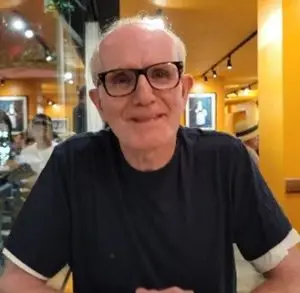
Dr. Michael O’Loughlin has devoted considerable time in his writing to autobiographical exploration of his own subject formation and the complexity of his status as an exile from Ireland. He will begin by sharing excerpts from his writings—and particularly from an interview with his mother—illustrating the ancestral, sociohistorical, and emotional occlusions that lay the foundation for his being. Is it possible, Wiegman wonders, to tell a story that exceeds the boundary of the personal, and transcends “idioms of the ordinary” (p. 6)? Can we trouble our own lived experiences in ways that shed light on the sociopolitical formation of our subjectivities? He will link this work to a long tradition in hauntology and genealogy (e.g., Edward Emery, Avery Gordon, Abraham & Torok, Davoine & Gaudillière, Jacques Derrida, Haydee Faimberg, Anne Ancelin Schűtzenberger) that illustrates the sociohistorical constitutedness of subject formation. Nicholas Rand suggests provocatively that an analysis is necessarily “an analysis in absentia of several generations.” He will then move back to autobiography to situate his thinking about encountering the Other, confronting particularly the whiteness of his own racial formation, and the situatedness of that whiteness in both colonial and socioeconomic contexts. If, as Claudia Tate suggests, psychoanalysis functions “as a writing of the ethnicity of the White western psyche,” we have much work to do to unconceal these processes and work toward a more emancipatory and inclusive psychoanalysis. In his concluding section, he will explore the possibility of what Judith Butler calls “giving an account of oneself,” examining larger societal structures such as racialized capitalism and neoliberalism in subject formation, drawing particularly on Butler as well as Suely Rolnik and Achille Mbembe to invite discussion of how our work might enhance creativity, and the potential for freedom.