
In this workshop, Dr. Feinstein will begin with a group discussion on uses, benefits, and limitations of doing supervision using five forms of supervision: case-based supervision, video/audio recordings of patient sessions, process notes supervision, transcription supervision, and live supervision. A mini-lecture will then present the key components of the Cognitive Apprenticeship Model (CAM) of supervision, followed by a description of six experiential tools that can be used to teach all forms of psychotherapy: modeling, scaffolding, coaching, Socratic questioning, reflection, and exploration. All six tools can be used during live supervision of psychotherapy cases with any trainee. The majority of the workshop will be devoted to interactive practice, as participants apply and discuss three to four of these six tools. Participants will also receive a handout to guide the workshop, along with relevant articles about the Apprenticeship Model of supervision and training.
Experiential Psychotherapy Supervision: The Apprenticeship Model
Agenda
- 7:30 pm Welcome and introduction
- 7:35 pm Presentation
- 8:50 pm Q&A
Learning Objectives
- Discuss the relevant benefits, uses, and limitation of case-based supervision, video/audio recordings of patient sessions, process notes supervision, and live supervision.
- Explain and demonstrate implementation of CAM-supervision, including the format, phases of supervision, and application of 3-4 of the 6 tools of CAM-supervision.
Meet the Presenter
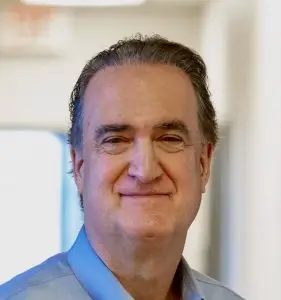
Robert Feinstein, MD
Robert E. Feinstein, MD is Professor of Clinical Psychiatry at the Donald and Barbara Zucker School of Medicine at Hofstra/Northwell in Long Island, New York. He received his psychoanalytic training at Columbia University Center for Psychoanalytic Training and Research. He is currently Director of CME for Northwell Department of Psychiatry and Founder and Owner of Empathian.com, a mental health education and supervision company in academic partnership with Northwell Department of Psychiatry. He is also editor of Personality Disorders (Primer On), Oxford University Press, 2021. Dr. Feinstein has a private practice in Stamford, Connecticut.
References
Feinstein, R. E. (2020). Descriptions and reflections on the cognitive apprenticeship model of psychotherapy training and supervision. The Journal of Contemporary Psychotherapy, 50, 203–212.
Feinstein, R. E., Huhn, R., & Yager, J. (2015). Apprenticeship model of psychotherapy training and supervision: Utilizing six tools of experiential learning. Academic Psychiatry, 39(5), 585–589.
Feinstein, R. E., & Yager, J. (2013). Advanced psychotherapy training: Psychotherapy scholars’ track and the apprenticeship model. Academic Psychiatry, 37(4), 248–253.
Disclosures
Division 39 is approved by the American Psychological Association (APA) to sponsor continuing education for psychologists. Division 39 maintains responsibility for this program and its content.
CE Eligibility
This program, when attended in its entirety, is eligible for 1.5 continuing education credits. Austin Psychoanalytic will provide certificates of attendance to participants who attend the program in full. Austin Psychoanalytic’s continuing education programs are sponsored through Division 39’s APA-approved continuing education program. It is the responsibility of each licensee to verify that a given program meets the continuing education requirements for their specific license. Participants outside of Texas should consult their own licensing boards regarding CE eligibility.
Accessibility, Non-discrimination, and Privacy
Division 39 is committed to accessibility and non-discrimination in all continuing education activities and conducts its programs in accordance with the American Psychological Association’s Ethical Principles of Psychologists and Code of Conduct. Reasonable accommodations will be made whenever possible for participants with accessibility needs. Questions, concerns, requests for accommodations, or complaints may be directed to info@austinpsychoanalytic.org. Participants are also asked to respect the privacy and confidentiality of others throughout the program.
Financial Disclosure
There is no commercial support for this program. Neither Division 39, Austin Psychoanalytic, nor the presenter has any financial relationships or conflicts of interest that could reasonably be construed as influencing the program content.
Cancellations and Refunds
Registrants may cancel or transfer their registration to another person up to 50 hours before the event from their confirmation email, by logging into their member account if applicable, or by contacting info@austinpsychoanalytic.org. No cancellations, transfers, or refunds will be permitted within 50 hours of the event start time.
Grievances
Austin Psychoanalytic conducts its educational programs in accordance with the ethical standards of the American Psychological Association. Participants with a concern regarding a speaker or a Continuing Education program are asked to submit a written account of the matter to info@austinpsychoanalytic.org. Where a complaint is substantiated, Austin Psychoanalytic will determine an appropriate remedy, which may include placement in a comparable program at no additional cost, a credit toward a future program, or a partial or full refund.